
How we verify that a watch is genuine, that the movement matches the case, and that the serial is real. Under camera, in a secure office in Maui. What we check, in what order, with what tools, and what we do when we find something.
Time, place, team, documentation. The basics before the deep-dive.
Time: 2 to 3 business days from receipt for standard references, 4 to 5 for high complications. Location: our secure authentication room at the Maui office. Team: in-house, with an outside specialist called in for high complications where a general watchmaker cannot reliably assess the movement. Documentation: filmed continuously on the shop camera. Video retained for at least 90 days and made available on request. If the seller wants to watch the authentication live, we arrange a video call for the appraisal step.
Every watch goes through the same four checks, in the same order. Here is what happens at each one.
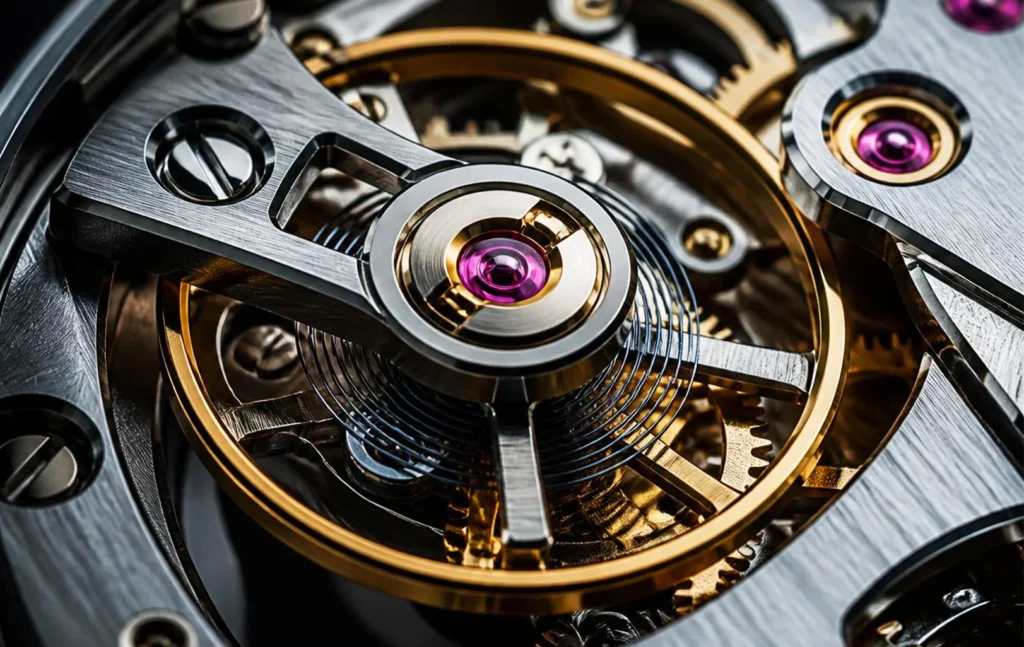
The caseback opens on the bench in the secure room. Calibre number confirmed against the reference. On a Rolex 116500LN, we expect a calibre 4130. On a Patek 5711, a 26-330 S. The wrong calibre in a familiar case is the fastest way to spot a movement swap, and we look for it first.
Service history reviewed for mismatched screws, unofficial parts, or timing regulation that would not have left the factory. Genuine service parts are marked and traceable to a brand service center; aftermarket parts are usually visible under a loupe. If we find aftermarket parts, we document them with a photo comparing the part to a known original.
Hairspring examined under loupe for magnetization or damage. Rate variance measured on a timegrapher across five positions if the watch is running. Any timing regulation outside expected tolerance is flagged.
Engravings, laser marks, and hallmarks checked against the reference. Lug shape and case profile compared against reference dimensions using calipers. Refinishing detection is the main thing here: a heavily polished case usually shows softer lug lines, rounded bevels, or removed brushing that betrays the polish job.
Polished cases are noted, not disqualifying. Whether a polish removed original geometry matters more than whether the case was polished at all. A light service polish that preserved the lines is common and expected. An aggressive polish that reshaped the case is a deduction.
Caseback markings, reference engravings, and serial engravings cross-checked against the movement calibre and the reference. If any of these do not agree, we photograph everything and flag it.
Print quality examined under loupe: font weight, letter spacing, the specific typography that shifts across production eras. Lume aging checked for consistency between hour markers, hands, and pip. A mismatched patina between markers and hands is often the first sign of a service replacement.
Redial detection: comparison to a known original from the same reference and era. We keep reference photos of common redials for the pieces we see most often. Common tells include: subtle differences in the crown logo, softer letter edges from repainting, and off-white or overly-clean lume in a piece the seller says has never been serviced.
Service dials are common on older pieces and are noted honestly. They are not counterfeits; they are brand-authorized replacements from a service center, and they are typically identifiable because the dial itself is period-inconsistent with the case and movement.
Serial number verified against known reference production ranges. A serial in a range that does not match the reference dating, dial, or caseback is a red flag. If the serial matches expected ranges, we cross-check it against the warranty card and service records if included.
Warranty cards examined for consistent typography, embossing, correct dealer stamps, and serial-to-case matching. Original papers add value to any resale, typically 5 to 15 percent depending on the reference. Card-only pieces (no watch present) are not authenticated as watches; we can only comment on the paper itself, and we do not buy paper-only lots.
Service records reviewed for consistency with the watch’s apparent condition. A watch presented as never-serviced but with obvious wear does not disqualify the piece, but we note the inconsistency. Honesty in the intake makes the whole process faster.
This is the question every seller asks when they see two listings of the same reference at different prices. The answer is always a combination of the factors above: one piece has better condition, better documentation, or a more desirable dial variant. Even among pieces that appear identical in listing photos, subtle differences in case sharpness, bracelet stretch, and dial originality create real price gaps.
But there is also a factor that has nothing to do with the watch itself: the venue. A dealer selling direct to a collector through their own platform can price higher than a dealer wholesaling the same piece to another dealer. Chrono24 listings (consumer-to-consumer or dealer-to-consumer) typically run 10 to 20 percent above dealer-to-dealer pricing. Auction results on exceptional examples can run even higher because of competitive bidding dynamics.
When a seller compares the price they were offered to a Chrono24 listing, they are often comparing a dealer-buy offer (which reflects wholesale economics: authentication, holding cost, marketing, resale risk) to a retail asking price (which reflects the highest possible market for a piece the seller has already decided to list and wait on). Those are two different markets, not evidence that the dealer is underpaying. Understanding this distinction is the single most useful thing a seller can learn about watch valuation.
Honest limits. Better to be explicit than to leave you with the wrong expectation.
We are not a certification service. We do not issue certificates or authentication documents that can be used for insurance or resale purposes. If you need a formal certificate, the brand’s service center is the appropriate resource. Rolex Service, Patek Philippe Service, Audemars Piguet Le Locle, and equivalents at each brand provide the certificates that insurers and resale platforms accept.
We are not a service center. We identify service work but do not perform it. If your watch needs service, we can refer you to a reputable watchmaker in Maui, or you can go direct to the brand. We do not upsell service work as part of the sale.
We are not a metallurgical lab. We do not test material composition, verify precious metal content beyond the hallmarks, or run isotope analysis. These are rarely relevant for genuine luxury watches, and where they are relevant (very old or unusual pieces), we tell you which specialist to consult.
What we do is verify that the watch is genuine, that the movement matches the case, that the serial is real, and that the value we quoted is defensible for the purpose of us buying, consigning, or trading it. That is the boundary of the service.
Documentation protects both parties. Here is how it works.
Every authentication is filmed continuously on the shop camera from the moment the watch is removed from its packaging to the moment it is returned to the safe. The camera captures the bench, the tools, and any close-up work under the loupe. Both sides of the conversation are recorded, so any discussion of a finding is preserved.
Video protects both parties. If a dispute arises about the condition of the watch on arrival, or whether we replaced a part, or whether we found something the seller did not know about, the footage settles it. In 20 years, we have needed to refer to the footage a handful of times, and each time it resolved the situation quickly and fairly.
Video is retained for at least 90 days and made available to the seller on request. If you would like to see the authentication of your specific watch, ask and we send the file. If you want to see the authentication live, we arrange a video call for the appraisal step. That typically takes 30 to 45 minutes and covers movement, case, dial, and any specific findings.
Honest disclosure of what we most often see. Sets expectations before you experience a firm-vs-indicative gap.
Service replacement parts are the most common finding. Small deduction, typically 2 to 8 percent depending on which part. Bracelets, crowns, and pushers are the usual candidates. If the part is a genuine brand replacement from a service center, the deduction is on the small end. Aftermarket parts fall on the larger end.
moderate deduction, typically 5 to 15 percent. Depends on how visible the redial is and how important dial originality is for that particular reference. On a vintage Submariner, dial originality is worth substantially more than on a modern Datejust.
larger deduction, sometimes 20 to 40 percent depending on the reference. Occasionally a deal-breaker if the swap is to a wildly incorrect movement or if the swap is masking damage. We tell you plainly if the swap changes our decision to buy.
small to moderate deduction, 3 to 10 percent. Depends on how aggressive the polish was. A light service polish that preserved the case shape is close to zero deduction.
small to moderate premium, 5 to 15 percent. Original box and accessories: small premium, 2 to 5 percent. Nothing at all found: firm matches indicative exactly. This is the most common outcome across all authentications.
Perpetual calendar, tourbillon, minute repeater, split-second chronograph, high-frequency escapements.
High complications require an outside specialist. A general watchmaker cannot reliably assess whether a perpetual calendar module is original, whether a tourbillon carriage is period-correct, or whether a minute repeater’s chime is in tune. We bring in a specialist for movement inspection on these pieces, typically from our Hawaii network or from a specialist in Los Angeles for the more unusual references.
Timeline extends by 1 to 2 business days. Same insurance during shipping, same process overall. Higher-value pieces (typically above $50,000) also benefit from supplemental insurance during shipping. We arrange that as part of the intake conversation, before the label is sent.
If your piece is unusual or you are uncertain whether it qualifies as a high complication, submit anyway. We tell you what the timeline looks like and what specialist we need to bring in, and we quote the offer once we have talked to them.
The honest walk-away scenario. Nobody enjoys this conversation, but here is exactly what happens.
If a redial was found, the photo compares your dial to a known original from the same era. If a service replacement was found, the photo shows the mismatched part alongside the correct reference. If a movement swap was found, the calibre number and the serial-to-movement mismatch are both documented. Nothing is hidden.
Firm offer adjusts to reflect what we found. The percentage impact ranges in Section 7 above are the guide, but the specific number is set by the specific issue. We tell you how much the offer moved and why.
Your options at that point: accept the adjusted number and get paid same day, negotiate a middle ground if the difference is small, or refuse and get the watch shipped back at our cost, insured, within one business day. For the full walk-away scenario, see the parent How It Works page.
Authentication, Answered
Two to three business days for standard references. Four to five for high complications where we bring in an outside specialist. We keep you informed if anything extends beyond that.
On request, yes. Video is retained for at least 90 days. Ask any time and we send the file for your specific watch.
We show you the photos and the specific reasoning. If you still disagree, you have the option to refuse the adjusted offer and have the watch shipped back at our cost. We do not force a haggle, and we do not charge a fee for walking away.
Yes, on request. We arrange a video call for the appraisal step, typically 30 to 45 minutes, covering movement, case, dial, and any findings.
We are honest about it. For unusual pieces, we may bring in an outside specialist we know from the trade, or we may refer you to a specialist better suited to authenticate it. We do not fake expertise on pieces outside our familiarity.
Twenty years in the trade, with brand training on the major references we see. For high complications, we bring in specialists with WOSTEP training or equivalent watchmaking credentials. Specific credentials for the specialist assigned to your piece can be shared on request.
We have the tools for standard casebacks and for the harder ones (screw-down monobloc backs, snap-on backs with fragile seals, older casebacks with corrosion). If a caseback is stuck or a seal will be damaged by opening, we tell you before opening and get your consent.
Occasionally, for existing clients or for higher-value pieces where the seller needs a second opinion before consigning through another party. We charge a flat fee for standalone authentication rather than tying it to a purchase. Contact us for pricing.
Get an indicative offer today. Authentication happens once you decide to proceed.