
How much the original box, warranty card, and documentation actually affect your watch’s resale value. Brand-by-brand, with specific numbers.
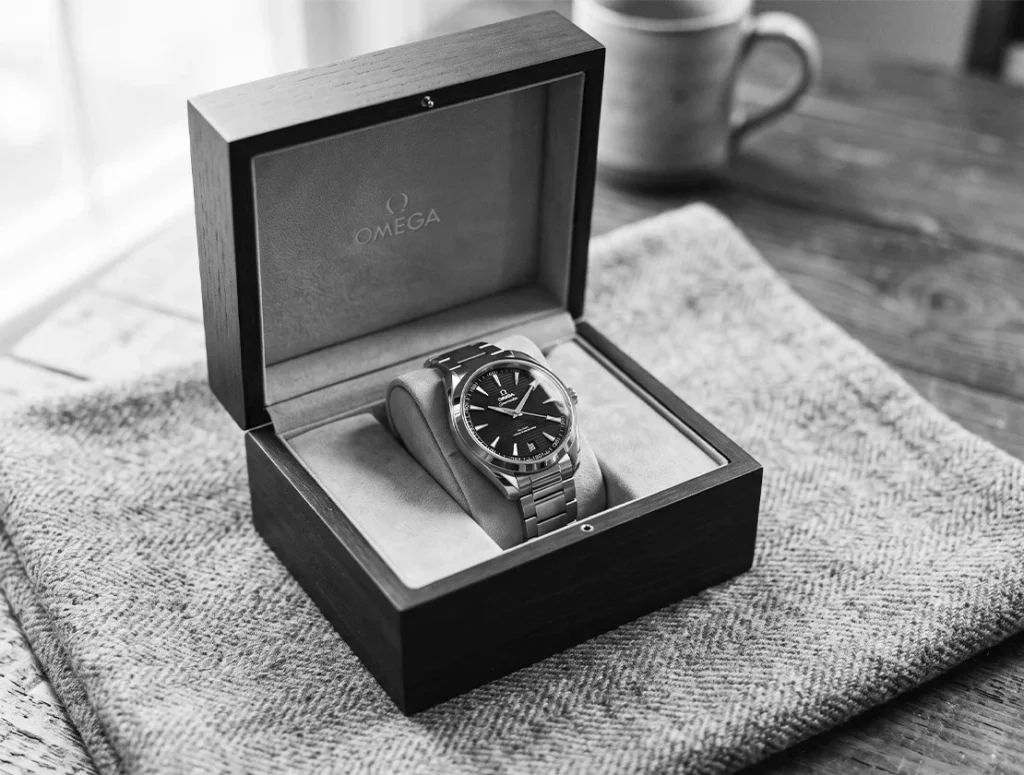
The warranty card is the most valuable document in the set. It ties the serial number to the original purchase and proves provenance. On a modern Rolex Submariner, having the full set (card, box, tags) versus watch-only adds $500 to $1,500 to the resale value. On a Patek Nautilus, the premium is $3,000 to $8,000 or more. On an Omega Speedmaster or a Tudor Black Bay, the premium is narrower: $200 to $600. The box without the card retains very little premium. If you have lost everything, you can still sell the watch. The offer adjusts, but the watch is still the watch.
The phrase “full set” or “box and papers” refers to the original documentation and packaging that came with the watch at purchase. The components, in rough order of importance:
The warranty card is the critical piece. On modern Rolex watches, this is a green card (post-2020: gray card with QR code) stamped with the serial number, reference number, and the selling dealer. On Patek, it is the Certificate of Origin. This card is the only document that ties the specific serial number to a specific original purchase, which serves as provenance evidence. Without it, the watch’s history before the current owner is undocumented. The watch is not less genuine, but buyers discount for the question mark.
After the card: the chronometer certificate (Rolex COSC cert), the original purchase receipt, the inner box, the hang tags, the outer box, and the instruction manual. Each adds marginal value in roughly that order. The box without the card is packaging without provenance; it adds a small amount (buyers like the presentation) but not the substantive premium the card provides.
The documentation premium varies dramatically by brand because each brand’s collector market values provenance differently.
Rolex. On a modern Submariner (116610 or 126610 family), full set over watch-only adds $500 to $1,500. On a Daytona (116500LN or 126500LN), the premium widens to $1,500 to $3,000, because Daytona buyers sit at a higher price tier and are more documentation-sensitive. On a Datejust, the premium is narrower: $300 to $800. Volume works against the premium here; Datejusts are common, and buyers at the $8,000 to $12,000 level are less likely to walk away over missing papers. On vintage Rolex (pre-2000), original punched papers from the era are genuinely rare. A 1970s Submariner with its original guarantee booklet and punched purchase record can add significant collector premium because so few of those documents survived.
Patek Philippe. The widest documentation premium in the market. A Nautilus 5711 with full set versus watch-only: $3,000 to $8,000 or more, depending on the specific variant. Complications and Grand Complications: $2,000 to $5,000. Even a Calatrava carries $1,000 to $2,000 in papers premium. Patek collectors treat the archive extract and original documentation as integral to the piece, not optional extras.
Audemars Piguet. Royal Oak full-set premium is similar to upper-tier Rolex: $1,000 to $2,500 on modern references.
Omega. Speedmaster and Seamaster full-set premium: $200 to $600. Omega is a more accessible brand with higher production numbers. Most buyers at this tier prioritize the watch itself over the packaging.
Tudor. $100 to $400. Tudor buyers are the least documentation-sensitive in the luxury segment. The watch carries the value, not the paperwork.
If you have the card but not the box: you retain most of the documentation premium. The box is the least important component. Buy a generic watch box for presentation if you want, but no one is paying a premium for the cardboard.
If you have the box but not the card: the premium drops substantially. A Rolex inner and outer box without the warranty card adds maybe $50 to $150 of perceived value. It looks nice on the listing photo, but it does not solve the provenance question.
If you have neither: you are selling watch-only. This is completely normal. We buy watch-only pieces every week across all brands. The offer adjusts downward by the premium ranges listed above, but the watch is still fully sellable through any reputable dealer.
For Patek Philippe specifically: Patek offers an Extract from the Archives service. For approximately CHF 200 (roughly $220 to $240 at current exchange rates), Patek will research the watch by serial number and issue a certificate confirming the production date, original case material, dial description, and movement caliber. The process takes 4 to 8 weeks. This extract is accepted by auction houses, serious collectors, and reputable dealers as a legitimate provenance document. It does not fully replace the original Certificate of Origin, but it closes most of the gap. If you own a Patek without papers and you are not in a rush to sell, ordering the extract before listing is almost always worth the wait and the cost.
For Omega: the Omega Heritage department can sometimes provide historical documentation on vintage pieces. The service is less standardized than Patek’s and availability depends on the reference and era. For Rolex: there is no equivalent archive service available to the public. Once the original warranty card is lost, it cannot be replaced or reconstructed. This is why the Rolex card premium is so persistent in the market.
How Much Is My Rolex Worth
Watch Valuation Explained
Missing papers do not prevent a sale. They adjust the offer, and this guide gives you a sense of how much. If you want a specific number on your specific watch, papers or no papers, send us the reference and a few photos. We buy watch-only pieces across all brands, every week, and we will give you a firm number rather than a range.